Two traditions.
A fuller conversation.
Tarot imagery and I Ching hexagrams offer different ways to consider the same question. DuoSages compares their interpretations, then brings the circumstances into the conversation.
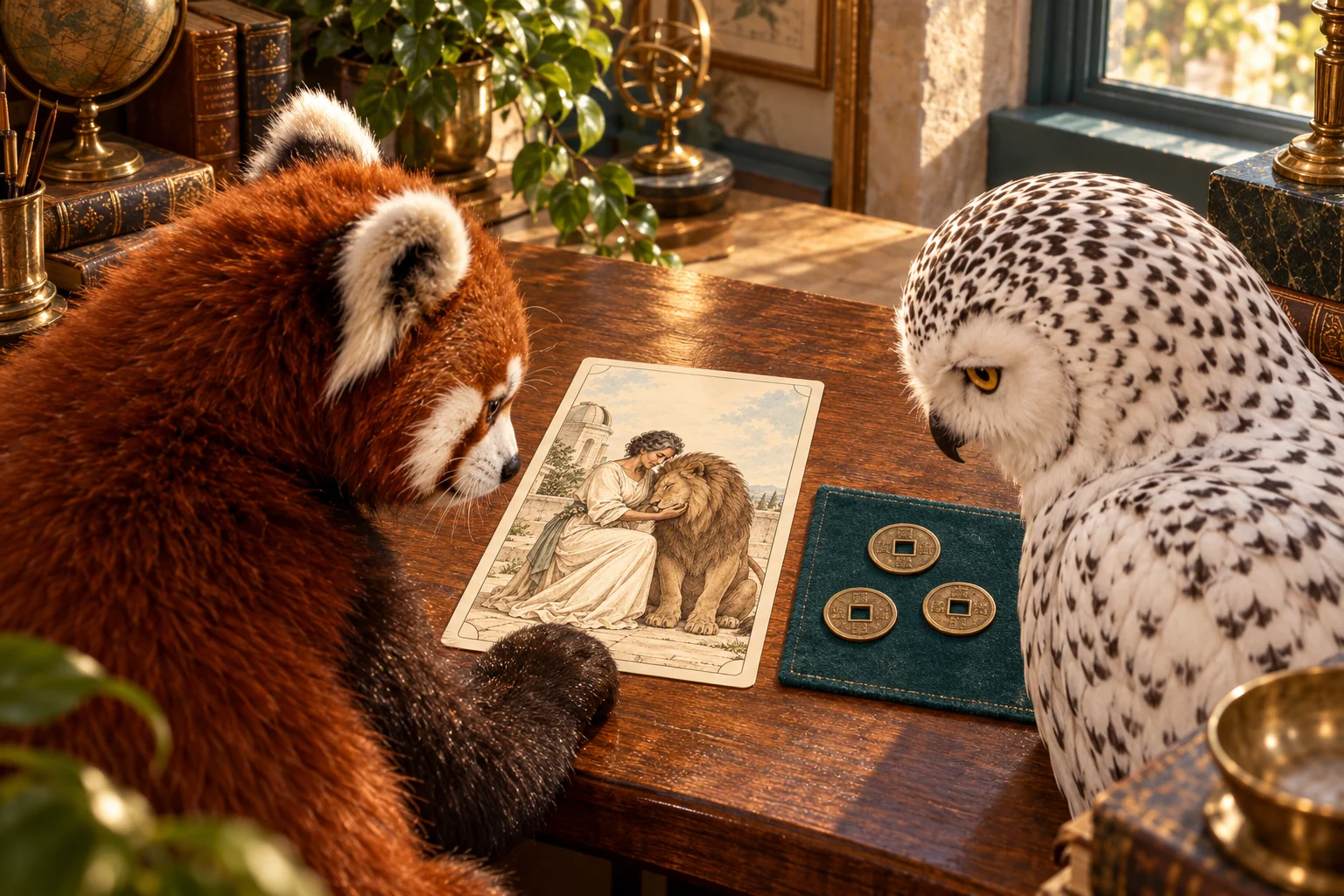
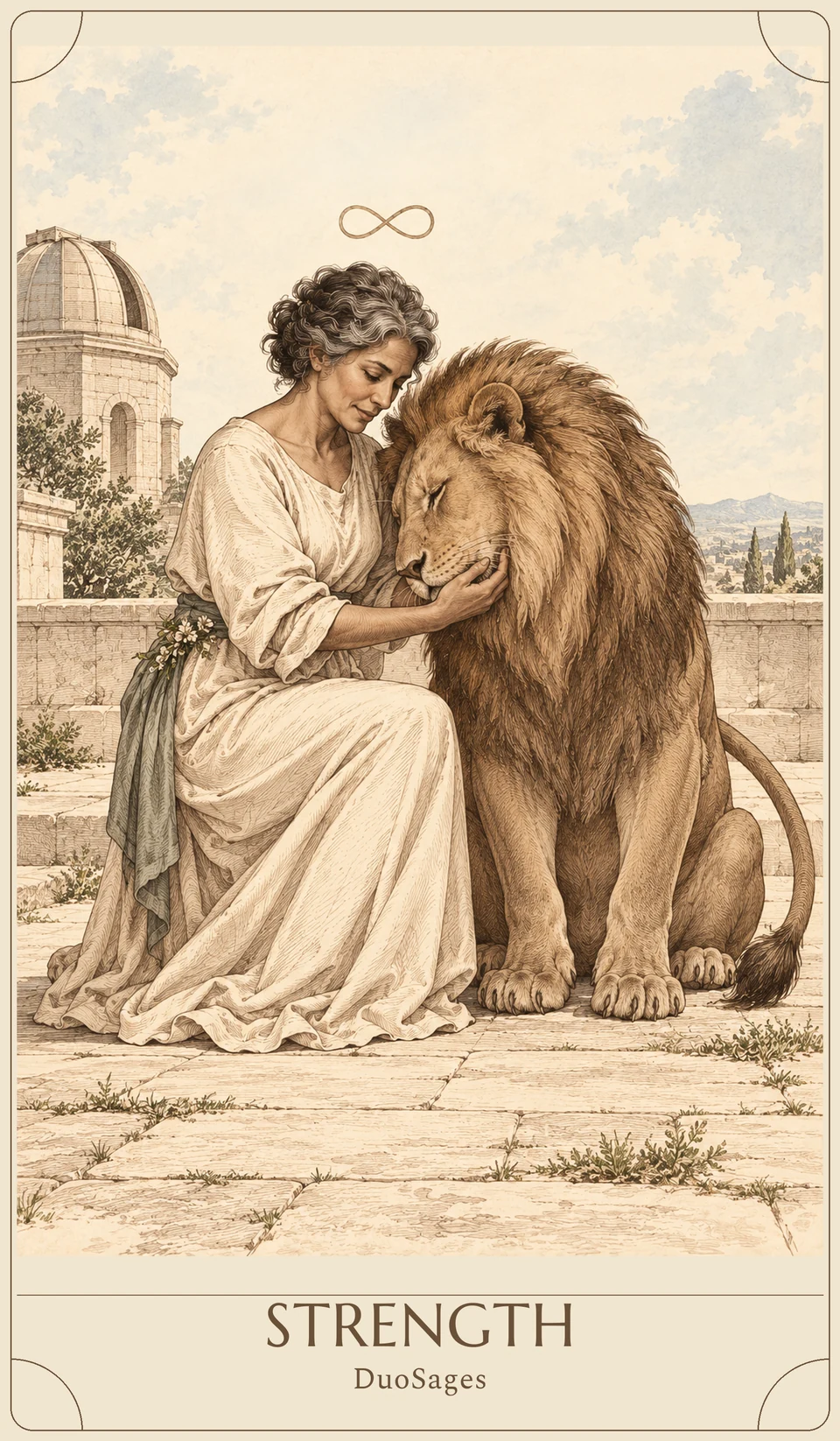
Strength, Celestial Atelier · Hexagram 53
Why consider both?
Tarot puts an image in view: a figure, a gesture, a relationship. The I Ching brings a hexagram and its text into view: a pattern to consider in relation to change.
Their roles overlap. Both can speak to emotions, choices and change. Comparing the interpretations can focus a theme or reveal a different question to examine. The circumstances determine how an interpretation fits.
One question. Two contributions.
Follow a fictional promotion example. Compare each contribution, then add context to see how the practical question changes.
What would make this promotion sustainable?
A new role brings more responsibility. Its working hours and training arrangements are still unclear.
Enlarge artworkBring them together
Speak directly. Examine the pace.
A direct conversation and a gradual start can coexist. Ask about the working conditions, then examine whether the responsibility can be introduced at a workable pace.
Check the actual working hours, responsibilities and support. The readings do not establish those facts.
Prepared illustration, not a live reading.
The explanation stays open to examination.
A useful interpretation shows how it connects the symbolic theme to the situation. The person can add facts, question a connection or disagree. Those details belong in the next response.
In this example, speaking directly about a role and taking on responsibility gradually can be considered together. The readings do not verify the employer's conditions or decide whether to accept.
Do the two readings have to agree?
No. If interpretations appear to conflict, examine what each is addressing and what assumptions connect it to the question. A difference is a reason to ask more, rather than a vote for one answer.
What is an I Ching hexagram?
A hexagram has six solid or broken lines, read from the bottom upwards. The I Ching contains 64 hexagrams with associated texts. Changing lines can contribute to a reading; this prepared example uses Hexagram 53 without changing lines.
What does AI contribute?
DuoSages uses AI to discuss the readings in relation to the question and the context supplied in the conversation. The explanation is an interpretation to examine. It does not establish unknown facts about another person or predict an outcome.
Example themes checked against Waite on Strength and Legge on Hexagram 53. The promotion scenario and its applications are original illustrations.
DuoSages Academy is open now.
Free DuoSages membership opens guided Tarot and I Ching lessons, card and hexagram meanings, and reading practice.
Create free membershipNo payment details required. Confirm an email address to start learning.
Want a personal conversation?
The DuoSages app is being prepared for early access. Join the list for beta invitations and launch updates.
Follow the app launchNewsletter signup is a separate choice from Academy membership.